Sustainability Begins with You
At Sarva Dharma, we empower individuals to take personal responsibility for protecting the planet and its life forms. Through education, grassroots engagement, and policy collaboration we inspire conscious choices to spark lasting, collective change.
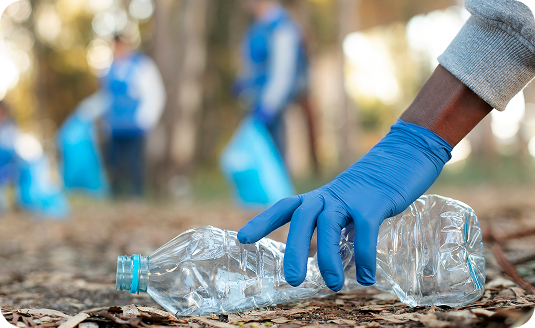
Our community of Sarva Guardians — protectors who transform everyday actions into a powerful movement for a sustainable future — is leading the charge.
We empower silenced voices
Sarva Dharma prioritises the voices that make the most difference:
Students
We foster curiosity and responsibility and nurture the next generation of environmental leaders. Our youth programme is aimed at people aged 7 to 22.
Women and children
Our role is to empower women and children with knowledge and confidence so that they can be pivotal change-makers in their communities.
Policymakers and institutions
We partner with government bodies and agencies to influence regulations that safeguard ecosystems and promote sustainable practices.
By empowering these groups, we aim to encourage a more compassionate, sustainable way of life for all living beings, one informed choice at a time.
Education Campaigns
Education for sustainability
Learning is the most sustainable route to consistent progress
Education is at the heart of our mission. Our campaigns in schools and universities aim to build consciousness among students and faculty, encouraging them to reflect on how their daily choices impact the planet and their fellow inhabitants.
Our campaigns
Ages 7 to 22, these campaigns:
- Promote conscious decision-making: Empower individuals to understand the ripple effects of their actions on the environment.
- Foster awareness, not judgment: Instead of framing actions as right or wrong, we cultivate a space for thoughtful reflection and informed choices.
- Inspire collective responsibility: Encourage students to lead by example, becoming Sarva Guardians who influence their peers and communities.
Our impact
We measure our impact on:
- Campaign reach: Total number of students and faculty engaged.
- Behavioural shifts: Feedback from participants on lifestyle changes and their influence in encouraging others to join the movement.
- Curriculum integration: Schools and universities are adopting the Sarva Dharma vision and mission in their social studies programmes.
Through these educational efforts, we’re building a foundation for long-term change.
Community Campaigns
Community engagement
Sustainability begins at the grassroots.
Lasting change begins with empowering communities. Our community campaigns prioritise sustainability education programmes for women and children, equipping them to lead the charge in environmental consciousness through grassroots environmental action.
Our approach
Prioritising women and children’s awareness.
Our campaigns foster collective reflection ,community empowerment and active participation through conscious living education and climate education for students.
We strengthen leadership among women and children to inspire daily and long-term meaningful action to protect their local environment and its inhabitants.
Our impact
We measure our impact on:
- Campaign reach: Track the number of campaigns conducted and their objectives achieved.
- Sarva Guardians enrolment: Monitor the number of people participating and committing to becoming Sarva Guardians.
- Stories of change: Document individual and community transformations through before-and-after records.
- Social media engagement: Amplify the voices and success stories from these campaigns to inspire a wider audience.
Together, we’re building communities that lead with empathy, resilience, and a shared commitment to safeguarding the planet.
Government Campaigns
Co-creating transformative policy
Our government environmental policy campaigns help legitimise and sustain grassroots impact.
Policy change is essential for lasting environmental protection. We collaborate with government bodies, policymakers, and global agencies to support the development and implementation of effective environmental regulations , ecosystem protection, climate resilience, and the well-being of ecosystems and living beings.
How we co-create policy
Advocating for new regulations
Partnering with policymakers to draft and help implement laws that reduce environmental harm and prevent cruelty toward animals and other living beings.
Monitoring implementation: Ensuring that these regulations are effectively enforced and deliver tangible benefits.
Our impact
We measure our impact on:
Assessing ecological improvements, reductions in animal cruelty, and cost benefits arising from these initiatives.
Adoption rate and implementation of policies in our regions of operation.
Through our efforts, we aim to create a policy framework that aligns with sustainable living while championing compassion for all life and responsibility at every level.
FAQs
What are government environmental policy campaigns?
Government environmental policy campaigns are initiatives that work with policymakers, public institutions, and global agencies to develop, improve, and implement laws that protect ecosystems, reduce environmental harm, and support sustainable living. These campaigns help turn environmental values into enforceable standards.
Why is government policy important for sustainability?
Policy plays a critical role in sustainability because it sets shared rules and protections at scale. While individual and community action drives cultural change, policy ensures that sustainable practices are accessible, regulated, and maintained across industries, regions, and populations.
How does Sarva Dharma work with governments and policymakers?
Sarva Dharma collaborates with government bodies, ministries, and global agencies to support evidence-based environmental regulations. Our approach combines insights from grassroots environmental action, community sustainability campaigns, and environmental education programmes to inform policies that are practical, equitable, and long-term.
How do community sustainability campaigns influence government policy?
Community sustainability campaigns create real-world examples of what works. When communities demonstrate collective action – especially through women and children’s community empowerment and grassroots environmental initiatives – they generate data, momentum, and public support that policymakers can act on.
Why is climate education important for effective policy?
Climate education ensures that policies are understood, supported, and upheld by the public. Climate education for students and communities builds long-term awareness, helping future generations engage with policy not as an abstract concept, but as part of everyday life.
What are community sustainability campaigns?
Community sustainability campaigns are local initiatives that bring people together to learn, reflect, and take action to protect their environment. They often include education, skill-building, and hands-on activities that support long-term environmental responsibility rather than one-off actions.
Why is environmental education important at the community level?
Environmental education helps people understand how their daily choices affect the planet and one another. At the community level, education creates shared understanding, strengthens participation, and ensures sustainability efforts are inclusive, practical, and culturally relevant.
How does Sarva Dharma deliver sustainability education programmes?
Sarva Dharma delivers sustainability education programmes through schools, universities, and community-led initiatives. Our approach combines climate education, conscious living education, and experiential learning to help people connect knowledge with everyday action.
How do community campaigns support long-term environmental change?
Community campaigns turn awareness into shared practice. When people learn and act together, sustainable behaviours are reinforced socially, making them easier to maintain and pass on. This collective action also builds momentum that supports wider cultural and policy change.
What role do women and children play in community sustainability efforts?
Women and children are often central to daily decision-making around food, water, waste, and energy. By prioritising women and children’s community empowerment, sustainability education becomes embedded in family and community life, creating lasting impact across generations.
What is climate education for students, and why does it matter?
Climate education for students goes beyond facts and statistics. It helps young people understand their relationship with the natural world, the consequences of environmental harm, and their role in shaping a more sustainable future – without fear or guilt.
Be Part of the Work That Protects Life
There are many ways to take part in Sarva Dharma’s work. You can volunteer your time, support our campaigns through donation, become a Sarva Guardian, or learn more about how we work with communities, schools, and policymakers to protect life and reduce harm.
What are we doing right now?
Follow us on Instagram
We spend years learning history, mathematics, literature, and the sciences.
But how much time do we spend understanding the living systems that make human life possible, the soil, the water, the ecosystems feeding billions of people?
Here are five things worth knowing. And passing on.
Tag someone who needs to see this. Awareness doesn't begin or end in a classroom.
80 billion land animals are raised and slaughtered for food globally each year.
And behind that number: carbon emissions, land use, water consumption, feed production. A vast, interconnected system that touches the health of this planet in ways most of us rarely pause to consider.
One Meatless Monday won't rewrite that. But it's a moment of awareness. And awareness, shared across a community, has a quiet power of its own.
This Monday, we're going meatless. You’re welcome to join us!
If you’ve tried Meatless Monday before, let us know in the comments.
Sarva Dharma is built on a single idea: empathy that reaches every living thing, and every system that holds life together.
This Meatless Monday, that idea takes us to the ocean.
The sea produces more than half of the oxygen in our atmosphere, more than every forest on earth combined. It absorbs the carbon we release. It has held this planet in balance long before we had words for it.
And yet, around 2.3 trillion animals are pulled from it each year through industrial fishing. Agricultural runoff from land-based food production, including livestock farming, contributes to vast dead zones where almost nothing can survive.
The sea and the land are not two different worlds. They are one system, and our daily choices ripple across both. Meatless Monday isn't about perfection. It's a moment of awareness, in keeping with the empathy-led life we believe in.
Pause with us this Monday. Try one meatless day. Tell us how it felt in the comments. We read every one. 🌿
We live in a world of urgency.
Every campaign shouts. Every headline warns. Every scroll accelerates.
But the deepest change - in a person, in a community, in a culture - happens slowly.
It begins in a moment of awareness. It grows through repeated, thoughtful choices. It lasts because it was never forced.
Sarva Dharma does not rush you. We simply ask: are you awake to it?
Save this one for a day when the world feels too loud to think. 🌿
What did you choose to eat today? We don’t judge, we listen. Share with us below 👇
If everyone in the UK went meat-free for just one day a week, it would save an estimated 2.4 million tonnes of CO₂ per year. The equivalent of nearly 1 million cars off the road.
That's one day. One country. One tiny shift in awareness. The data reveals the possibility of global transformation by changing just one small thing individually.
Happy Meatless Monday 🌱
There is no certificate. No threshold you must cross. No level of knowledge that qualifies you.
A Sarva Guardian begins the moment they decide that awareness is worth action.
That the life of a tree, an animal, a child in a community far from their own, matters. Each life, each potential for change. All of it.
This movement is for anyone willing to pay attention and let empathy lead their actions.
Are you paying attention?
Share this with someone who you think is already a guardia, they just might not know it yet.
It is easy to feel small in the face of it all. Climate change. Biodiversity loss. Pollution. Inequality.
The scale is crushing.
To change this, we don’t need one person to take a single enormous action. Rather, we need collective change — millions of small actions, made by people who decided to be aware.
Every guardian started somewhere. Most started by simply paying attention and changing one small thing. Just one change that they could do everyday.
Where are you starting? Drop a 🌱 in the comments if this resonates. We're building a community, one actively aware person at a time.
Livestock grazing occupies roughly 26% of the Earth's ice-free surface. And feed crops for those farmed animals take up around a third of all arable land globally.
For every person on Earth, only about 0.2 hectares of arable land remain available.
Land data reveals crucial, manmade changes to our ecosystems. And that’s worth paying attention to.
Did this post make you stop and think? Visit link in bio to share your reflection
Our community’s achievements
The results speak for themselves.