Sustainability Begins with You

At Sarva Dharma, we empower individuals to take personal responsibility for protecting the planet and its life forms. Through education, grassroots engagement, and policy collaboration we inspire conscious choices to spark lasting, collective change.

Our community of Sarva Guardians — protectors who transform everyday actions into a powerful movement for a sustainable future — is leading the charge.

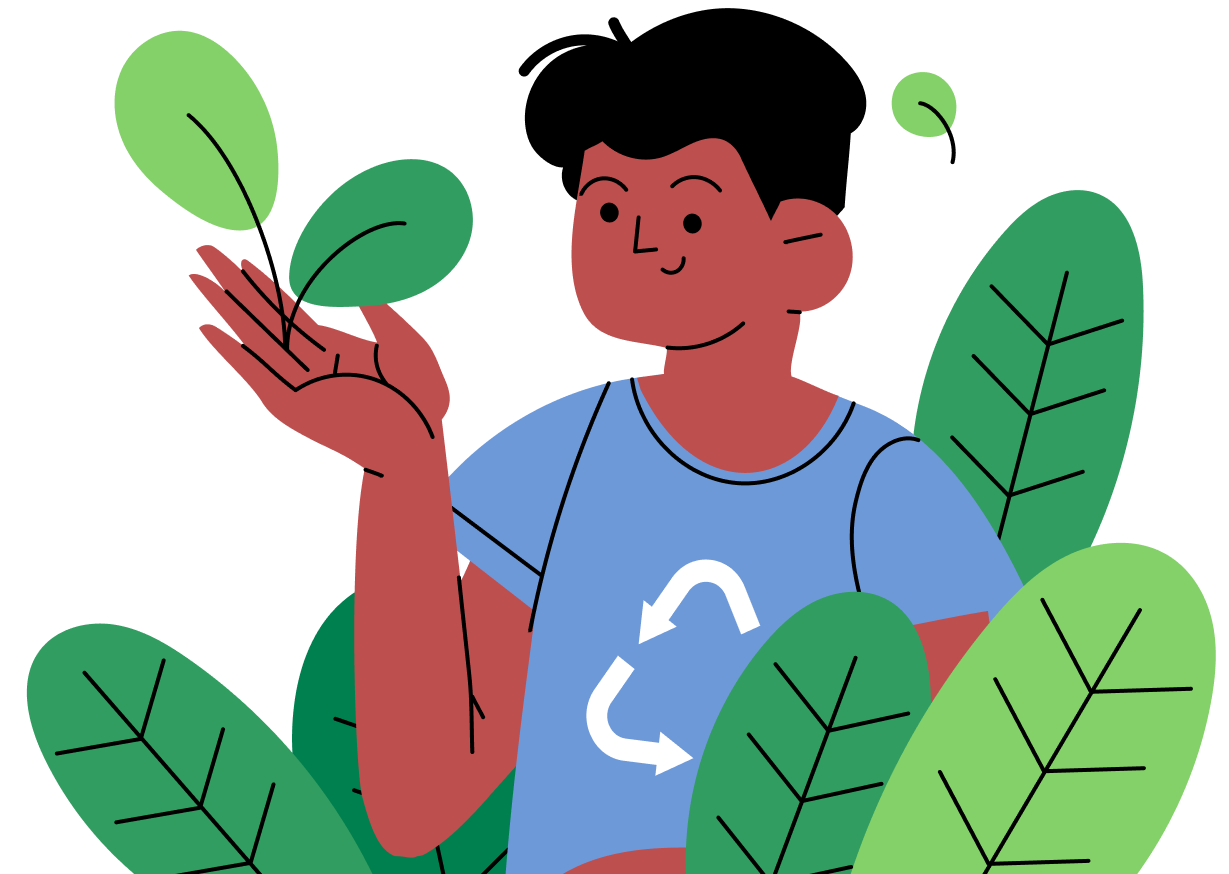
Illustration of a smiling person wearing a blue shirt with a white recycling symbol, surrounded by large green leaves, holding a small leaf in one hand, representing environmental awareness and sustainability.

We empower silenced voices

Sarva Dharma prioritises the voices that make the most difference:

Icon of three people below a graduation cap, all outlined in black on a light blue circular background, representing education or a learning community.

Students

We foster curiosity and responsibility and nurture the next generation of environmental leaders. Our youth programme is aimed at people aged 7 to 22.

Simple line drawing of a person wearing a head covering and a sari, depicted against a light blue circular background. The illustration suggests cultural or traditional attire.

Women and children

Our role is to empower women and children with knowledge and confidence so that they can be pivotal change-makers in their communities.

Icon of a classical building with columns and a triangular roof, outlined in black, centered on a light blue circular background.

Policymakers and institutions

We partner with government bodies and agencies to influence regulations that safeguard ecosystems and promote sustainable practices.

By empowering these groups, we aim to encourage a more compassionate, sustainable way of life for all living beings, one informed choice at a time.

Education Campaigns

Community Campaigns

Community engagement

Sustainability begins at the grassroots.

Lasting change begins with empowering communities. Our community campaigns prioritise sustainability education programmes for women and children, equipping them to lead the charge in environmental consciousness through grassroots environmental action.

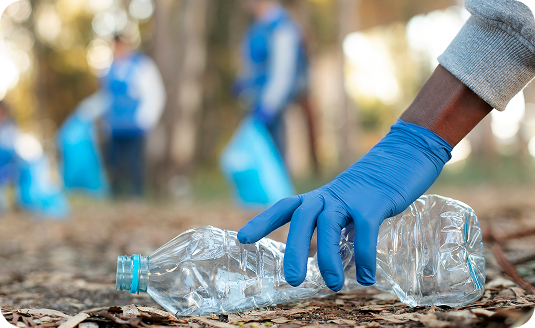
A person wearing a blue glove picks up a plastic bottle from the ground, with other people cleaning up litter in the blurred background outdoors.

Our approach

Prioritising women and children’s awareness.

Our campaigns foster collective reflection ,community empowerment and active participation through conscious living education and climate education for students.

We strengthen leadership among women and children to inspire daily and long-term meaningful action to protect their local environment and its inhabitants.

Our impact

We measure our impact on:

  • Campaign reach: Track the number of campaigns conducted and their objectives achieved.
  • Sarva Guardians enrolment: Monitor the number of people participating and committing to becoming Sarva Guardians.
  • Stories of change: Document individual and community transformations through before-and-after records.
  • Social media engagement: Amplify the voices and success stories from these campaigns to inspire a wider audience.

Together, we’re building communities that lead with empathy, resilience, and a shared commitment to safeguarding the planet.

Government
Campaigns

FAQs

What are government environmental policy campaigns?

Government environmental policy campaigns are initiatives that work with policymakers, public institutions, and global agencies to develop, improve, and implement laws that protect ecosystems, reduce environmental harm, and support sustainable living. These campaigns help turn environmental values into enforceable standards.

Policy plays a critical role in sustainability because it sets shared rules and protections at scale. While individual and community action drives cultural change, policy ensures that sustainable practices are accessible, regulated, and maintained across industries, regions, and populations.

Sarva Dharma collaborates with government bodies, ministries, and global agencies to support evidence-based environmental regulations. Our approach combines insights from grassroots environmental action, community sustainability campaigns, and environmental education programmes to inform policies that are practical, equitable, and long-term.

Community sustainability campaigns create real-world examples of what works. When communities demonstrate collective action – especially through women and children’s community empowerment and grassroots environmental initiatives – they generate data, momentum, and public support that policymakers can act on.

Climate education ensures that policies are understood, supported, and upheld by the public. Climate education for students and communities builds long-term awareness, helping future generations engage with policy not as an abstract concept, but as part of everyday life.

Community sustainability campaigns are local initiatives that bring people together to learn, reflect, and take action to protect their environment. They often include education, skill-building, and hands-on activities that support long-term environmental responsibility rather than one-off actions.

Environmental education helps people understand how their daily choices affect the planet and one another. At the community level, education creates shared understanding, strengthens participation, and ensures sustainability efforts are inclusive, practical, and culturally relevant.

Sarva Dharma delivers sustainability education programmes through schools, universities, and community-led initiatives. Our approach combines climate education, conscious living education, and experiential learning to help people connect knowledge with everyday action.

Community campaigns turn awareness into shared practice. When people learn and act together, sustainable behaviours are reinforced socially, making them easier to maintain and pass on. This collective action also builds momentum that supports wider cultural and policy change.

Women and children are often central to daily decision-making around food, water, waste, and energy. By prioritising women and children’s community empowerment, sustainability education becomes embedded in family and community life, creating lasting impact across generations.

Climate education for students goes beyond facts and statistics. It helps young people understand their relationship with the natural world, the consequences of environmental harm, and their role in shaping a more sustainable future – without fear or guilt.

Be Part of the Work That Protects Life

There are many ways to take part in Sarva Dharma’s work. You can volunteer your time, support our campaigns through donation, become a Sarva Guardian, or learn more about how we work with communities, schools, and policymakers to protect life and reduce harm.

What are we doing right now?

Follow us on Instagram

You don't need to do everything. You need to do something... consistently.

What's your one habit right now? 💬 Tell us below.

#SarvaDharma #ConsciousLiving #SmallChoices #Consistency #PersonalResponsibility
Happy Meatless Monday!

It's not a rule. Not a challenge. It's an invitation to pause and notice.

Today we're sharing our summer staple, what are you making? Tag us and we'll repost our favourites 👇

#MeatlessMonday #SarvaDharma #ConsciousEating #PlantBased #MeatlessMondays
Sustainability doesn't need to be an overhaul. Pick ONE of these this July and make it yours 🌿

Small choices, repeated, are how culture changes. We're here for the long game, not the perfect score.

#SarvaDharma #GrassrootsChange #SmallChoices #ConsciousLiving
If you've been curious about eating less meat but aren't sure where to start, Meatless Monday is a great place to start. 

It’s a gentle invitation to try more plant-based meals. Whether your motivations are environmental or health-based, we welcome you to try it with us!

A few places to begin:

- Start with what you already love. Most dishes have a plant-based version that's just as satisfying: a vegetable curry instead of a chicken one, lentils where mince used to be, chickpeas in place of meat in a stew.
- Lean on eggs and dairy if you're not ready to go fully plant-based. Meatless doesn't mean vegan. It just means no meat for one day.
- Make it interesting, not restrictive. Explore a cuisine that naturally centres plants — Middle Eastern, Indian, Ethiopian, Japanese. Some of the world's most beloved food traditions are built around vegetables, grains, and pulses.

Don't aim for perfection. One meatless Monday, done imperfectly, is still a day without meat. That counts. 🌿

Share your favourite meatless meal below, you might inspire someone else's Monday. 👇

#MeatlessMonday #SarvaDharma #PlantBased #MeatlessIdeas #ConsciousLiving #EarthTok #AwakenAwareness
What does abundance mean to you? 

We live in a culture that measures abundance by how much we have: more stuff, more options, more speed, more convenience. Social media and advertising often push the idea that we need to be buying more and doing more in order to be happy.

And yet the things that most reliably produce a sense of fullness - safety, peace, uncontaminated water and air, time with people we love, a living world outside our window, are not things that can be ordered online. 

While our modern society makes us feel like consumerism is the only path to feeling sufficient, it’s often the exact opposite of what we really need to feel in abundance. Conscious purchasing choices, slowing down, and protecting the planet is often what gives us a sense of purpose and fulfilment. 

What are your thoughts on the concept of abundance? When do you feel most fulfilled?

#SarvaDharma #Abundance #AwakenAwareness #ConsciousLiving #Consumerism
Light pollution might not seem as big a problem as water pollution or air pollution, but it matters and not just to stargazers.

It disrupts the migration patterns of birds and insects, interferes with plant growth cycles, and affects the feeding and reproductive behaviour of marine life. In humans, light pollution can affect our circadian rhythm, sleep quality, and long-term health. 

99% of people in Europe and North America can no longer see the Milky Way from where they live, and about 80% of the world’s population lives under light-polluted skies. 

For many of us, light pollution has become the new normal. But it’s still a form of pollution worth noticing. 

When last did you clearly see the night sky, and where were you? Let us know below. 

#SarvaDharma #LightPollution #EnvironmentalAwareness #ConsciousLeadership #Sustainability #AwakenAwareness #NatureConservation
Approximately 80% of deforestation in the Amazon is driven by cattle ranching.

The Amazon is home to approximately 10% of all species on Earth. It generates rainfall patterns that affect agriculture across South America. It’s a carbon store that the planet depends on. 

Food choices at the consumer level are connected to decisions made at a global scale. Our mission is to bring gentle awareness to this connection, not to judge, but to help others see the big picture. 

Reducing your meat consumption, even if it’s for one day a week, can make a meaningful difference to the planet around you. 

Want to try it? You’re welcome to join us for Meatless Monday 🌿 

#MeatlessMonday #SarvaDharma #Amazon #Deforestation #Sustainability #FoodSystems

Our community’s achievements

The results speak for themselves.

A woman holding a sign that reads 98% stands next to three boxes, each also displaying 98% and the text Lorem Ipsum Doler. Green leaves decorate the bottom of the image.
A smiling person holds a sign showing 98% Lorem Ipsum Doler. Three more boxes nearby display the same 98% Lorem Ipsum Doler text. Two green leaves are at the bottom left.
An illustration of a woman holding a sign that reads 98% Lorem Ipsum Doler. Above her are three white boxes, each also displaying 98% Lorem Ipsum Doler. Green leaves are in the bottom left corner.