Most advice about consuming less arrives at the same moment: just before you buy. Pause at the till, ask whether you really need it, put it back if you don’t. It’s useful – but it’s also late. By the time you’re holding the thing, the wanting has already done its work.
Mindful consumption isn’t really about the moment of purchase. It’s about everything upstream of it – noticing why a want arises in the first place, before it ever hardens into a decision. The pause at the till catches a few impulses. Awareness, practised a little earlier, means far fewer of them reach the till at all.
At Sarva Dharma, we believe in reflection over reaction – meeting our choices with compassionate awareness rather than guilt. This article is about what mindful consumption actually means, where it really happens, and how to practise it without turning every purchase into an interrogation.
A quick summary of this article:
- Mindful consumption is often reduced to a checklist at the point of purchase, but that intervenes too late.
- It’s really about awareness upstream – noticing why a want arises before it becomes a decision.
- Many of the wants we act on are manufactured by advertising, comparison, and constant exposure; noticing their source often dissolves them.
- “Enough” is a feeling consumer culture is designed to keep you from reaching – and learning to recognise it is a skill you can build.
- Practising mindful consumption is less about strict rules and more about attention and noticing.
- Sarva Dharma supports this kind of reflective, conscious living through education and community work.
What Mindful Consumption Really Means
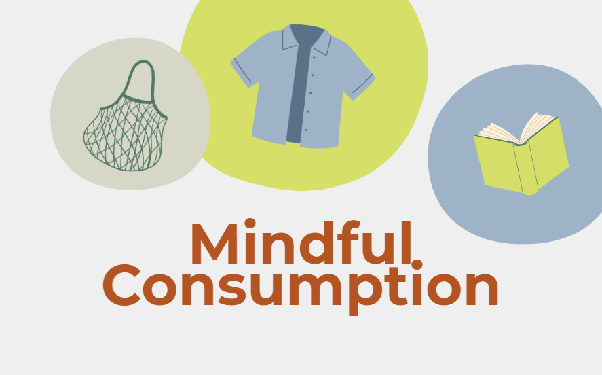
Mindful consumption is the practice of bringing awareness to why and how you consume – not just whether you should in a given moment.
The popular version is narrower than that. It’s the mental checklist: do I need this, can I borrow it, what happens to it when I’m done? Those are good questions, and they have their place. But they all fire at the same late stage – when you’re already considering a specific purchase. They work on the symptom (this particular buy) rather than the source (the wanting that brought you here).
True mindful consumption sits further back. It’s less about interrogating each purchase and more about understanding your own patterns of desire: what pulls at you, where those pulls come from, and which of them actually belong to you. When you bring awareness to that level, you’re not constantly resisting temptation at the checkout – there’s simply less temptation arriving in the first place. That’s a quieter, more sustainable way to consume less, and it sits at the heart of what Sarva Dharma stands for.
Where Wanting Actually Comes From
Here’s something worth sitting with: a surprising number of the things we want, we didn’t want until very recently.
A want can feel like it comes from inside us – a spontaneous, personal preference. But many are manufactured. An advert plants one. A scroll through other people’s lives sharpens it into comparison. A “customers also bought” suggestion nudges it along. Repeated exposure does the rest, turning something you’d never considered into something you feel you’re missing. The want feels like yours, but its origin is often elsewhere.
This is why awareness is so powerful, and so gentle. You don’t have to fight a manufactured want with willpower. You only have to notice where it came from. A desire traced back to an advert you saw an hour ago, or a comparison you didn’t choose to make, tends to loosen its grip on its own. Much of mindful consumption is simply this: catching the source of a want, and letting that recognition do the deciding. It asks for curiosity, not discipline.
Learning the Feeling of “Enough”
There’s a feeling that consumer culture is quietly built to keep you from ever reaching: enough.
Almost every part of the system that sells to us depends on “enough” staying just out of reach. The latest version is always better. The collection is never quite complete. Satisfaction is framed as temporary, a brief pause before the next want. If you ever genuinely felt you had enough, a great deal of consumption would simply stop – which is precisely why so much effort goes into making sure you don’t.
The good news is that “enough” is a feeling you can learn to recognise. It’s a skill, not a personality trait. It grows through noticing – pausing after you already have something and asking whether it’s serving you, registering the moment a need is actually met rather than rushing past it toward the next one. People who consume mindfully aren’t necessarily more disciplined; they’ve often just become fluent in the sensation of sufficiency. They can tell when they’ve arrived, so they stop. That fluency is one of the most freeing things mindful consumption offers – not deprivation, but the relief of no longer always reaching.
How to Practise It
Mindful consumption is a practice, not a rulebook. It’s built less on strict prohibitions and more on attention. A few ways to develop it:
- Notice before you resist. When you feel a pull to buy, get curious about where it came from before deciding anything. Often the noticing is enough.
- Mind your inputs. What you give attention to shapes what you want. Reducing exposure to advertising and comparison-heavy feeds quietly reduces the wants they generate.
- Let wants wait. Give a desire a little time before acting on it. Many fade once the moment that created them has passed.
- Check in after, not just before. Notice how things you already own are serving you. Recognising sufficiency is how the feeling of “enough” grows.
- Keep the pause at the till – but treat it as the last line, not the whole practice. By the time you reach it, most of the work should already be done upstream.
Start with one of these, not all five. Mindful consumption deepens through repetition, and a small, repeatable practice like Meatless Mondays can be a gentle way to feel what consuming with awareness is actually like.
Frequently Asked Questions
It’s the practice of bringing awareness to why and how you consume – noticing where your wants come from and whether they serve you – rather than only deciding whether to buy something in the moment.
That’s part of it, but it’s the late stage. Those questions fire when you’re already considering a purchase. Mindful consumption works further upstream, on the wanting itself, so fewer purchases reach that point at all.
Trace it back. Ask when you first wanted it and what prompted that. Wants that appeared right after an advert, a scroll, or a comparison are often manufactured – and simply noticing that tends to loosen their hold.
“Enough” is the sense that a need has genuinely been met. It’s easy to rush past, because consumer culture keeps it out of reach. You learn it by pausing after you have something, noticing whether it’s serving you, rather than moving straight to the next want.
No. It isn’t deprivation or strict minimalism. It’s about consuming with awareness, so your choices are genuinely yours – which often means buying less, but never means buying nothing.
Yes. A purchase not made creates no production, transport, packaging, or eventual waste. Reducing consumption at the source – at the level of wanting – prevents environmental harm more effectively than managing it after the fact.
Minimalism is often about owning few things as an end in itself. Mindful consumption is about the awareness behind your choices. You might end up owning less, but the focus is on conscious decision-making rather than hitting a particular number.
Because guilt tends to make people defensive rather than thoughtful, while reflection gives choices room to actually change. It’s the same compassionate approach we take to every part of our work – awareness first, judgement never.
Consuming With Awareness
Mindful consumption was never meant to be a tense negotiation at the checkout. At its best, it’s the opposite of effort – a quiet awareness of where your wants come from, and the freedom of recognising when you already have enough.
You don’t need to police every purchase. You only need to pay a little more attention, a little earlier, and let that awareness do the work that willpower usually struggles with. Start by noticing one want today – where it came from, and whether it’s really yours.
If reflective, conscious living is something you’d like to be part of, you can support work that makes conscious choices easier for everyone, or simply reach out to us.