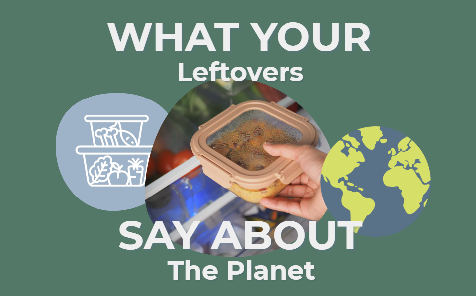
Open most kitchen bins at the end of the week and you’ll find a quiet record of habits: half a loaf gone stale, a container of something nobody got around to finishing, produce that wilted before it was used. None of it feels significant in the moment. Together, it adds up to one of the most overlooked ways everyday life touches the planet.
Learning how to reduce food waste rarely requires a dramatic overhaul. Most of it comes down to noticing patterns you’re probably not paying attention to yet, and adjusting a few small habits around them.
A quick summary of this article:
- Food waste is one of the most overlooked everyday ways we affect the planet.
- What ends up in the bin often reveals more about our habits than we realise.
- Learning how to reduce food waste rarely requires dramatic lifestyle change.
- Small, consistent habits around storage, planning, and portions make the biggest difference.
- Reducing food waste is one of the simplest places to start practising mindful consumption.
What’s Actually in Your Bin
Food waste rarely happens in one dramatic moment. It accumulates through dozens of small decisions: buying more than you need “just in case,” misjudging portions, forgetting what’s already in the fridge or pantry before shopping again.
None of this reflects carelessness so much as how easy it is to lose track of food once it’s out of sight. A closed container in the back of the fridge is remarkably easy to forget about, right up until it’s no longer edible.
The Hidden Cost of a Thrown-Out Meal
Every discarded meal carries more than the cost of the ingredients. It represents the water, land, energy, and labour that went into growing, transporting, and preparing it, all of it wasted the moment the food goes in the bin rather than on a plate.
Multiply that across a household, a neighbourhood, or a country, and a habit that feels entirely personal turns out to have a genuinely significant collective footprint.
What Leftovers Reveal About Our Habits
There’s no need for guilt here, but there is something worth noticing: what you throw away tends to say more about your relationship with consumption than what you buy in the first place. It shows where planning breaks down, where portions are consistently off, or where convenience quietly wins over intention.
Treating leftovers as information, rather than failure, makes it much easier to actually change the pattern instead of just feeling bad about it.
How to Reduce Food Waste Without Extra Effort
Most effective habits here are small and repeatable rather than demanding:
- Check what you already have before shopping, so duplicate purchases don’t quietly expire in the back of the fridge.
- Store leftovers somewhere visible, not buried behind other containers where they’re easy to forget.
- Plan one “use it up” meal each week built entirely around whatever’s about to go off.
- Freeze what you won’t get to in time, rather than letting it sit until it’s no longer usable.
None of these require special equipment or a significant time investment. They just require a slightly different habit of attention.
Beyond the Kitchen: Why This Connects to Everything Else
Food waste rarely stays an isolated habit. It tends to sit alongside other small, everyday choices about consumption, like a single weekly plant-based swap, that together shape a much bigger picture.
It’s also a clear example of how small, consistent choices shaping the future tend to work: rarely dramatic on their own, but meaningful once repeated and multiplied across households.
And it connects to something less obvious, too: compassion for the animals and habitats affected by what we waste, since the resources behind a wasted meal were drawn from the same ecosystems we’re trying to protect.
Frequently Asked Questions
Wasted food represents wasted water, land, energy, and labour used throughout its production, and it often ends up generating methane in landfill, a potent greenhouse gas. The impact is larger than most people assume for something so ordinary.
Check what you already have before buying more, and plan one meal a week specifically to use up what’s close to going off. Small planning habits tend to outperform strict rules.
It matters more than it seems. Food waste in landfill breaks down without oxygen and produces methane, a greenhouse gas significantly more potent than carbon dioxide over the short term.
Store leftovers somewhere visible rather than at the back of the fridge, label them if needed, and try to build at least one meal a week around using them up before they’re forgotten.
A Small Habit Worth Noticing
Your leftovers aren’t a verdict on your character. They’re simply information, a small, honest signal about where your habits could use a bit more attention.
Know someone who’d recognise their own fridge in this? Pass it on, or follow our journey and become an ambassador for the ideas we share.