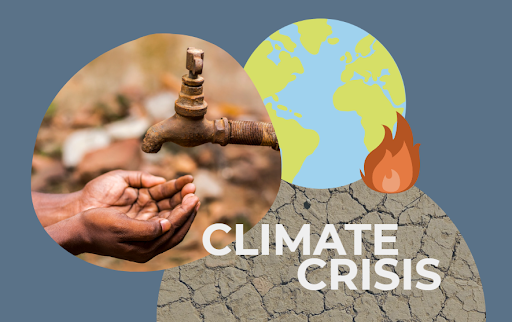
The climate crisis is global. Its consequences, however, are not evenly shared. The communities experiencing the most severe disruption to food, water, health, and safety are – in the vast majority of cases – the communities that have contributed least to the problem. The African continent, for example, accounts for less than 5% of global greenhouse gas emissions, yet bears some of the worst consequences of climate change. That gap between cause and consequence is not incidental. It is the defining injustice of our time.
Understanding who is most affected – and why – is not a political exercise. It is an act of empathy. And empathy, as who we are at Sarva Dharma reflects, is where meaningful, lasting action begins.
A quick summary of this article:
- The climate crisis does not affect all people equally – those who have contributed least to it are often experiencing its worst consequences first.
- Children are among the most physically and physiologically vulnerable, with the burden of climate-related disease falling disproportionately on the very young.
- Women and girls – particularly in lower-income regions – face compounded risks from climate change, including displacement, food insecurity, and increased vulnerability to gender-based harm.
- Indigenous communities face a dual injustice: profound disruption to the lands, cultures, and livelihoods they depend on, despite holding some of the world’s most effective environmental knowledge.
- Small island nations face an existential threat from rising sea levels, despite producing a negligible share of global emissions.
- Low-income communities, both globally and within wealthier countries, have the least capacity to adapt and the fewest resources to recover from climate shocks.
- Understanding these inequalities is not about assigning blame – it is about building the awareness and compassion that motivates more conscious, responsible action.
The Climate Crisis Is a Human Crisis
Before it is an environmental story, the climate crisis is a human one. Behind the data on rising temperatures, melting ice sheets, and shifting weather patterns are real people: farmers watching harvests fail, families displaced by flooding, children born into communities where clean water is increasingly scarce.
The IPCC has identified that between 3.3 and 3.6 billion people currently live in contexts of high climate vulnerability, and that between 2010 and 2020, mortality caused by floods, droughts, and storms was 15 times higher in regions of greater vulnerability.
These are not abstract statistics. They describe people – with families, histories, and futures – whose daily lives are being shaped by a crisis they did not create. Holding that reality with honesty and compassion is the starting point for understanding why environmental justice matters, and why collective responsibility is not simply an ethical position but a practical necessity.
Children: The Most Vulnerable Generation
No group is more vulnerable to the physical consequences of climate change than children – and no group has less power to influence the decisions that caused it.
UNICEF estimates that approximately 850 million children – one in three worldwide – currently live in areas where at least four climate and environmental shocks overlap. It is also estimated that 88% of the additional disease burden from climate change will be borne by children under five years of age.
Children are physiologically more susceptible to heat, polluted air, and contaminated water than adults. Their developing bodies and immune systems are less equipped to withstand the diseases – cholera, malaria, dengue fever – that are expanding their range as temperatures rise. Extreme weather events destroy schools, disrupt nutrition, and interrupt the stability that healthy childhood development requires.
For children who are already disadvantaged, the risks are even higher. As climate shocks become more frequent and intense, poorer families face increasingly greater difficulties recovering – pushing the most vulnerable children, young people, and women further into poverty and driving migration and social tension.
The climate crisis is, in this sense, not a future problem for the next generation to solve. It is a present crisis being experienced, right now, by millions of children who had no part in creating it.
Women and Girls: A Disproportionate Burden
Climate change affects everyone, but not equally. Women and girls – particularly in parts of sub-Saharan Africa, South Asia, and Latin America – face compounded and specific risks that go far beyond what the headline data typically captures.
According to UN Women’s gender snapshot 2025 report, under a worst-case climate scenario, more than 158 million additional women and girls could be pushed into extreme poverty by 2050, nearly half of them in Africa, with 236 million more facing food insecurity.
The reasons are structural as much as environmental. Where gender inequality already exists – in access to land, financial resources, decision-making power, and legal protection – climate shocks amplify those inequalities directly. When harvests fail, it is often women who go without food first. When water sources dry up, it is often women and girls who walk further to find alternatives – journeys that carry their own safety risks. An estimated 80% of all people displaced by climate change are women and girls.
High temperatures and pollution are also associated with adverse maternal and perinatal health outcomes, including low birth weight, preterm birth, and gestational complications – risks concentrated in tropical, lower-income regions where healthcare capacity is already stretched.
None of this is inevitable. It is the product of pre-existing inequalities colliding with a crisis they did not cause. Addressing it requires both climate action and the broader work of building equity – which is why Sarva Dharma’s community and education work places particular emphasis on empowering women and girls as agents of change, not simply recipients of support.
Indigenous Communities: First Impacted, Last Consulted
Indigenous peoples around the world are among the first to experience the direct consequences of climate change – and among the least heard in the conversations about how to respond to it.
Indigenous peoples’ deep dependence on, and close relationship with, the natural environment means that climate change exacerbates the difficulties they already face: political and economic marginalisation, loss of land and resources, human rights violations, and discrimination.
The disruption is not only material. For many indigenous communities, land is inseparable from identity, cultural practice, and spiritual life. When ecosystems shift, when seasonal patterns become unpredictable, when the plants and animals that anchor traditional knowledge begin to disappear – what is lost is not simply a resource base. It is a way of knowing and being in the world, built over generations.
Weather and temperature variability, precipitation fluctuations, and stronger winds cause crop failures in indigenous societies, disproportionately impacting already vulnerable groups including women, children, the elderly, and the economically disadvantaged.
There is a profound irony here worth sitting with: the communities whose relationship with the natural world has historically been the most ecologically sound – whose land management practices have sustained biodiversity for centuries – are among those suffering most acutely from the ecological consequences of industrialised economies they had little part in building.
Low-Income Communities Everywhere
The inequalities of climate change are not only a story of geography. Within every country – including the wealthiest – the people least insulated from climate disruption are those with the fewest resources to adapt or recover.
Climate change is projected to drive between 68 and 135 million people into poverty by 2030, reversing decades of economic progress concentrated in the world’s most vulnerable regions.
In higher-income countries, low-income urban communities face elevated risks from extreme heat – in cities where buildings retain heat, green space is scarce, and air conditioning is unaffordable. Rural communities dependent on agriculture face income volatility as weather patterns become less predictable. Those in flood-prone areas, often the least expensive land available, face repeated property damage with limited access to insurance or government support.
Research published in Nature Climate Change found that two-thirds of global warming is attributable to the wealthiest 10% of people, and that emissions from the wealthiest groups in countries like the United States and China led to a two-to threefold increase in heat extremes across the world’s most vulnerable regions.
The relationship between climate inequality and economic inequality is not coincidental. It is structural. The same systems that concentrate wealth and resources in the hands of a few also concentrate climate risk in the lives of many.
Why This Matters for All of Us
Understanding who is most affected by the climate crisis is not an exercise in guilt. It is an exercise in awareness – the kind that builds genuine empathy, and from empathy, the kind of motivated, values-driven action that lasts.
When the human faces of the crisis are visible – the child in a flood-prone region, the woman walking further for water – the abstract becomes real. And when the real becomes visible, it is much harder to look away, and much easier to act.
This is the principle that sits at the heart of compassion-driven environmental action: that understanding how our choices connect to the lives of others – near and far – is what gives those choices moral weight and personal meaning.
A few ways that awareness can translate into action:
- Reduce your own footprint – not from guilt, but from an understanding of where overconsumption causes the most harm to those least able to absorb it.
- Support organisations working directly with affected communities – including those focused on women’s empowerment, indigenous land rights, and climate adaptation in lower-income regions.
- Eat with awareness – the food system is one of the largest drivers of the emissions that disproportionately affect vulnerable communities. Our Meatless Monday programme is a simple, practical entry point.
- Stay informed about climate justice – not only the environmental science, but the human geography of who experiences what, and why.
- Get involved – community-level action, education, and advocacy all contribute to the broader cultural shift that the scale of this crisis requires.
The Ethic of Shared Responsibility
There is an old idea, woven through many of the world’s philosophical and spiritual traditions, that we are all connected – that what harms one part of a system eventually harms the whole. Sarva Loka Hitam – the Vedic principle of well-being for all stakeholders – is one expression of it. The concept of Ahimsa, or non-harm, is another.
These are not abstract ideals. Applied to the climate crisis, they become a practical framework: that the well-being of a child in a flood-prone village in Bangladesh, or a woman walking for water in sub-Saharan Africa – is not separate from our own. It is part of the same story.
Shared responsibility for the planet does not mean everyone bears the same burden. It means those with the most capacity to act – whether through consumption choices, civic engagement, or advocacy – carry the greatest obligation to do so. Not because they are told to. But because they understand what is at stake for others, and choose to act accordingly.
That shift – from awareness to empathy to action – is what Sarva Dharma exists to support.
Frequently Asked Questions
The communities most severely affected are typically those who have contributed least to it: people in low-income countries, women and girls in the Global South, indigenous communities, residents of small island nations, and low-income populations globally. Vulnerability is shaped by both geography and pre-existing social and economic inequality.
Structural gender inequalities – in land rights, financial access, decision-making power, and legal protection – mean that climate shocks compound existing disadvantage. Women and girls are disproportionately represented among those displaced by climate events, and face specific health risks including adverse pregnancy outcomes linked to heat and pollution.
Environmental justice is the principle that the burdens of environmental harm and the benefits of environmental protection should be equitably distributed – and that communities most affected by environmental damage should have meaningful participation in decisions about how to address it.
Children are physiologically more vulnerable to heat, disease, and malnutrition than adults. They are also more susceptible to the psychological impacts of displacement and instability. The majority of additional disease burden from climate change is projected to fall on children under five.
Indigenous communities often depend directly on ecosystems for food, water, medicine, and cultural practice. Climate disruption to those ecosystems is therefore both materially harmful and culturally devastating. They also tend to face political and economic marginalisation that limits their capacity to adapt or seek redress.
No. Research consistently shows that the highest-emitting individuals and countries are among the least vulnerable to climate impacts, while the lowest-emitting communities – in terms of both national and individual contributions – are bearing the greatest burden.
Through education and community empowerment – particularly focused on women and children in lower-resource communities – and by building the kind of awareness and compassion that motivates long-term, values-driven action. Our community and education work is built on the understanding that lasting change begins with people who understand why it matters.
Understanding it is the first step. Reading widely, listening to the voices of communities most affected, and allowing that understanding to sit alongside your daily decisions – about what you eat, what you buy, who you support – is how awareness becomes action.
Compassion Is Where Change Begins
When we understand that the climate crisis is not an abstract environmental problem but a deeply human one – shaped by inequality, experienced most acutely by those with the least power to address it – something shifts. The distance between “the climate crisis” and “the people living it” collapses. And that collapse is where empathy begins.
Empathy, in turn, is where action becomes sustainable – not driven by obligation or fear, but by a genuine sense of connection to lives beyond our immediate circle, and a recognition that what we do every day is never entirely without consequence for others.
Explore our work and discover how Sarva Dharma supports communities on the frontlines of the climate crisis, and how you can be part of the change.
Sources
Intergovernmental Panel on Climate Change. (2022). Climate change 2022: Impacts, adaptation, and vulnerability. Contribution of Working Group II to the Sixth Assessment Report of the IPCC. Cambridge University Press. https://doi.org/10.1017/9781009325844
Licker, R., Ekwurzel, B., Doney, S. C., Cooley, S. R., Lima, I. D., Heede, R., & Frumhoff, P. C. (2019). Attributing ocean acidification to major carbon producers. Environmental Research Letters, 14(12), 124060. https://doi.org/10.1088/1748-9326/ab4942
Masson-Delmotte, V., & Zhai, P. (Eds.). (2022). Summary for policymakers: Climate change 2022. IPCC. https://www.ipcc.ch/report/ar6/wg2/
Oxfam International. (2024, October). Carbon inequality kills: Why curbing the excessive emissions of the wealthiest is essential to end the climate crisis. https://www.oxfam.de/system/files/documents/carbon_inequality_kills.pdf
Romanello, M., & Di Napoli, C. (2024). The 2024 report of the Lancet Countdown on health and climate change. The Lancet, 404(10465), 1847–1896. https://doi.org/10.1016/S0140-6736(24)01822-1
Temmerman, M., & Raina, N. (2023). Time to act: Climate change and its impacts on women’s sexual and reproductive health. PLOS Global Public Health, 3(8). https://doi.org/10.1371/journal.pgph.0002459
TechnoServe. (2026, April). 5 ways climate change disproportionately impacts women. https://www.technoserve.org/blog/5-climate-change-impacts-women/
UNICEF. (2024). Climate change is a child rights crisis. https://www.unicef.org/lac/en/climate-change
United Nations. (2024). Climate change and indigenous peoples. https://www.un.org/development/desa/indigenouspeoples/climate-change.html
UN Women. (2026, March). Women, climate change, and the search for accountability. https://www.unwomen.org/en/news-stories/op-ed/2026/03/women-climate-change-and-the-search-for-accountability
van Daalen, K. R., Romanello, M., Rocklöv, J., Semenza, J. C., Tonne, C., Markandya, A., Dasandi, N., Jankin, S., Achebak, H., Ballester, J., Bénéteau, L., Böse-O’Reilly, S., Burkart, K., Cai, W., Callaghan, M. W., Chambers, J., Dobbins, M., Domínguez-Berjón, M. F., Dreser, A., … Hamilton, I. (2022). The 2022 Europe report of the Lancet Countdown on health and climate change. The Lancet Public Health, 7(9), e712–e735. https://doi.org/10.1016/S2468-2667(22)00185-7
Werrell, C. E., & Femia, F. (Eds.). (2024, December 6). A heated issue: The unequal impacts of climate change and climate change mitigation. OECD Ecoscope. https://oecdecoscope.blog/2024/12/06/a-heated-issue-the-unequal-impacts-of-climate-change-and-climate-change-mitigation/