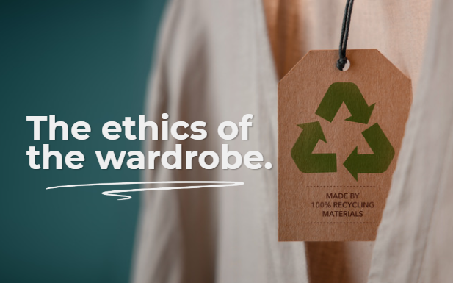
A wardrobe rarely feels like an environmental issue. It’s personal, expressive, sometimes even joyful, worlds away from the language of emissions and supply chains. And yet few everyday habits carry a heavier hidden footprint than what we choose to wear.
Making sustainable fashion choices doesn’t mean giving up style or self-expression. It means bringing the same awareness to your closet that you’d bring to any other part of a more conscious life.
A quick summary of this article:
- Fashion is one of the most resource-intensive industries, and one of the least visible in terms of its true cost.
- Sustainable fashion choices aren’t about buying less style – they’re about buying with more awareness.
- The ethics of a wardrobe touch the planet and the people, and often animals, involved in making it.
- Small shifts, like buying less but better or choosing secondhand, compound significantly over time.
- You don’t need to overhaul your closet overnight to start making more ethical choices.
What “Ethical” Actually Means for Fashion
Ethical fashion isn’t a single certification or a specific price point. It’s a way of asking better questions before you buy: What is this made of? How long is it built to last? What happened to the people, animals and climate, along the way?
None of this requires expertise. It requires curiosity, and a willingness to occasionally choose slower, more intentional purchases over quick, convenient ones.
What’s Not Obvious from a Label
A label tells you the fibre content and the country of origin. It rarely tells you how much water went into growing that fibre, what was sprayed on the soil to produce it, or what it sheds every time it’s washed.
The fashion industry relies heavily on synthetic fibres like polyester and elastane, even in fabrics marketed as “natural.” These petrochemical-based materials carry a heavy cost for both human health and the environment. Their production is highly energy-intensive, generating billions of kilograms of CO₂ emissions – many times that of natural materials – and every wash cycle sheds microplastics into waterways that eventually make their way back into soil, water systems, and food chains.
Conventional cotton, meanwhile, is one of the most water- and pesticide-intensive crops grown today, often farmed in ways that deplete the soil rather than restore it through practices like crop rotation.
The fashion industry also uses animal products extensively, a practice so widespread it has become normalised rather than questioned.
None of this is visible on a label. It sits in the composition – the choices made long before a garment reaches a hanger, quietly shaping its true environmental cost.
The Hidden Cost of a Full Closet
Clothing doesn’t announce its footprint the way, say, a car or a flight does. But growing the fibres, dyeing and treating the fabric, manufacturing, and shipping each garment adds up to one of the most resource-intensive supply chains in daily life, water, energy, chemicals, and labour, all folded into something that might only be worn once or twice.
Fast fashion in particular is built around short lifespans by design: trend cycles that move quickly enough to keep replacing what’s barely been worn. The cost of that speed rarely shows up on the price tag.
Sustainable Fashion Choices, Without Losing Your Style
None of this has to mean abandoning personal style. In practice, sustainable fashion choices tend to look like:
- Capsule Wardrobes: Buying less, but choosing pieces built to last rather than trend-driven items likely to be discarded quickly.
- Thrift Shopping: Exploring secondhand and vintage options before defaulting to new.
- Repairs & Alternations: Repairing or altering clothing instead of replacing it at the first sign of wear.
- Sustainable Education: Learning which materials and brands are more transparent about their supply chains, and supporting those that are.
Small Wardrobe Choices, Lasting Impact
None of these shifts require a dramatic closet overhaul. They work the same way most sustainable habits do: through small, consistent choices creating lasting impact rather than one sweeping change that’s hard to sustain.
Choosing one secondhand piece before your next new purchase, or repairing one item instead of replacing it, is enough to start shifting the pattern.
Seeing Fabric as More Than Material
It helps to remember that every garment began as something living or extracted, cotton grown in soil, wool from an animal, fibres drawn from the earth. Seeing the materials we wear as more than just resources – as things with an origin and a cost – makes it easier to treat them with more care once they’re in your hands, and easier to let go of them responsibly when their time with you ends.
Frequently Asked Questions
Fast fashion is built around rapid trend cycles and low prices, which typically depend on cheap materials, high water and chemical use, and labour conditions that prioritise speed and cost over worker welfare and durability.
Yes. Sustainable fashion isn’t about giving up style, it’s about being more intentional with what you buy, how long you keep it, and where it comes from.
Look for transparency: brands that share specifics about materials, labour conditions, and supply chains tend to be more credible than those relying on vague terms like “eco-friendly” without evidence behind them.
Durability, transparency, and versatility. Pieces that last, come from accountable sources, and work across multiple outfits tend to have a far lower footprint than frequently replaced, single-use trend pieces.
Generally, yes. Buying secondhand extends the life of an existing garment rather than creating demand for new production, which is typically the most resource-intensive part of a piece of clothing’s life.
Dress With Intention
A wardrobe built with intention doesn’t ask you to care less about how you look. It asks you to also care about what your clothing cost to make, and who or what paid that price.
If you’d like to think through what that looks like for you, get in touch with our team – we’d be glad to talk about small, sustainable shifts that fit your life and your style.